Observing Earth’s Dynamics.
Mapping Ecological Futures.
The Csillik Lab at Wake Forest University leverages multi-scale airborne and spaceborne Earth observation, on-the-ground technology, and predictive AI to translate complex data into actionable science. We map global ecosystem changes, track forest resilience, and build tools that empower decision-makers to safeguard planetary resilience.
LAB MISSION STATEMENT
At the intersection of spatial data science and forest ecology, our mission is to decode complex environmental patterns from space down to the canopy scale. We build scalable remote sensing solutions to tackle the world’s most urgent climate, carbon, and conservation challenges.
OUR TECHNOLOGY
In-House Technology & Autonomous Systems
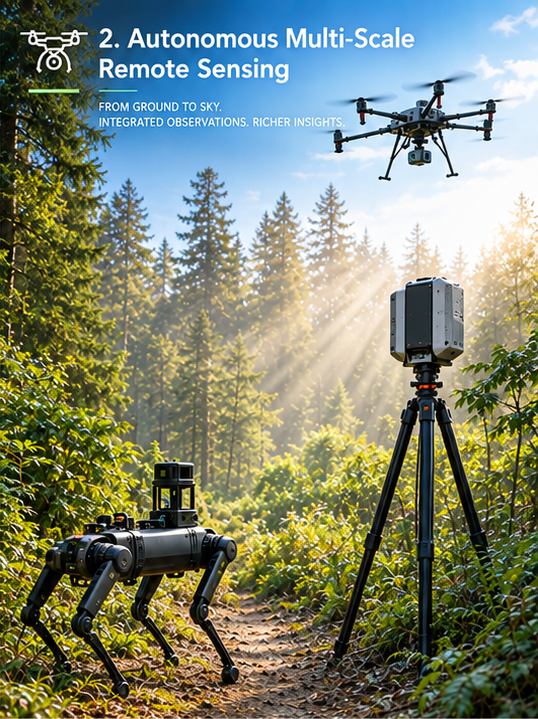
Our lab operates a multi-tier, end-to-end sensing stack. By bridging autonomous ground robotics, terrestrial laser scanning, and heavy-lift airborne payloads, we capture sub-centimeter ecological detail from beneath the forest floor to above the canopy.
DJI Matrice 350 RTK + L2 LiDAR + H30T Thermal
Leica BLK360 Terrestrial Laser Scanner
Go2 Pro Quadruped Robot Dog with LiDAR and Embodied AI
OUR RESEARCH
Research & Scientific Thrusts
Bridging ground-level physics and spaceborne observation to map ecosystem dynamics and address global environmental change.
Forest Carbon & Canopy Dynamics
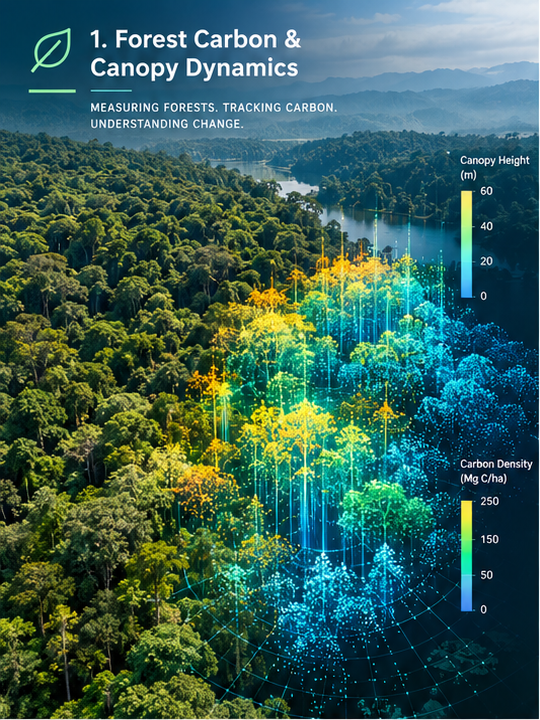
Forests are critical carbon sinks, yet quantifying biomass dynamics across varying scales remains a major challenge. We combine spaceborne LiDAR (GEDI, ICESat-2), radar, and terrestrial laser scanning (Leica BLK360) to measure 3D canopy architecture, track carbon stocks, and monitor forest degradation across tropical and temperate biomes in near-real time.
Autonomous Multi-Scale Remote Sensing
We pioneer multi-tier sensing workflows that bridge the gap between ground observations and satellite imagery. By pairing quadrupedal ground robotics (Unitree Go2 Pro) for understory navigation with heavy-lift UAS (DJI M350 RTK with L2 LiDAR & H30T thermal), we capture ultra-high-resolution microclimatic and structural detail across complex landscapes.
AI & Predictive Geospatial Analytics
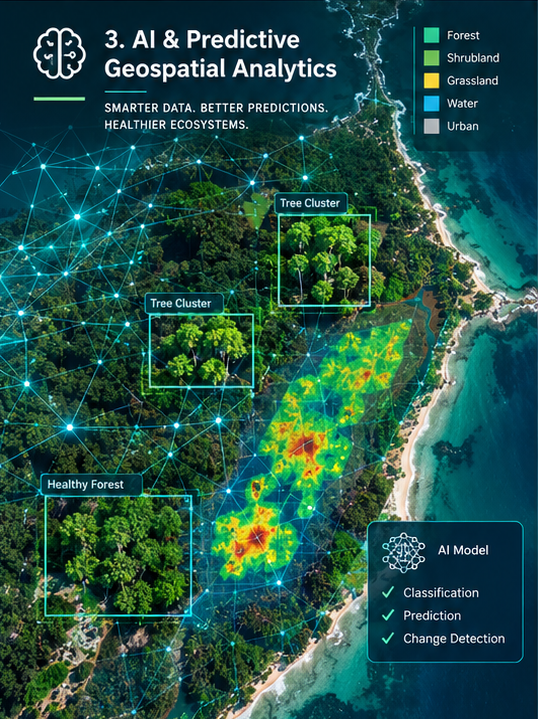
Converting petabytes of Earth observation data into ecological intelligence requires advanced computing. We build custom deep learning, computer vision, and object-based image analysis (OBIA) pipelines to automatically classify land cover, detect subtle canopy disturbances, and model time-series trends across satellite constellations.
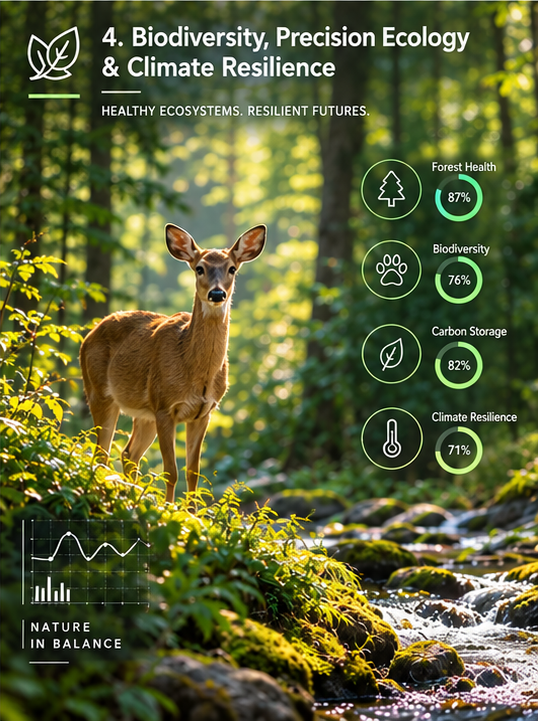
Precision Ecology & Biodiversity
Our work extends beyond data collection to solve real-world environmental challenges. We develop actionable spatial tools for precision agriculture, habitat conservation, and climate adaptation—empowering land managers, policy makers, and conservation organizations with data-driven decision support systems.
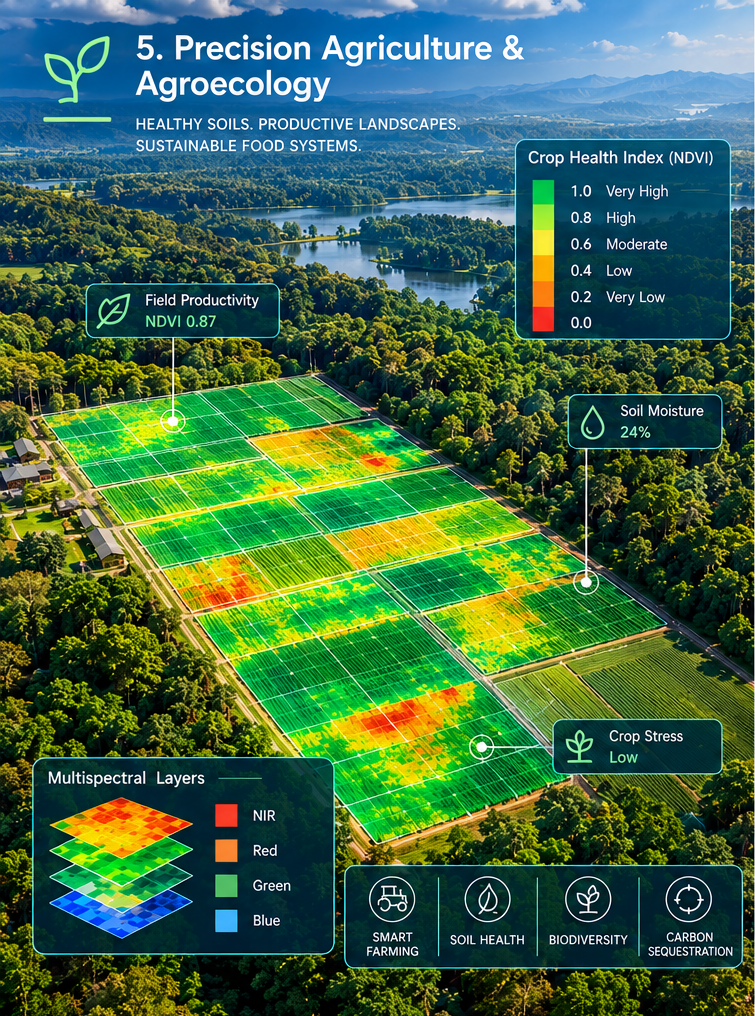
Precision Agriculture
Sustainable land management requires granular monitoring of working landscapes. We combine multi-temporal satellite imagery, UAS analytics, and automated machine learning models for crop-type classification to monitor field health, optimize agricultural resources, and track broad-scale land-use transitions without compromising surrounding natural ecosystems.
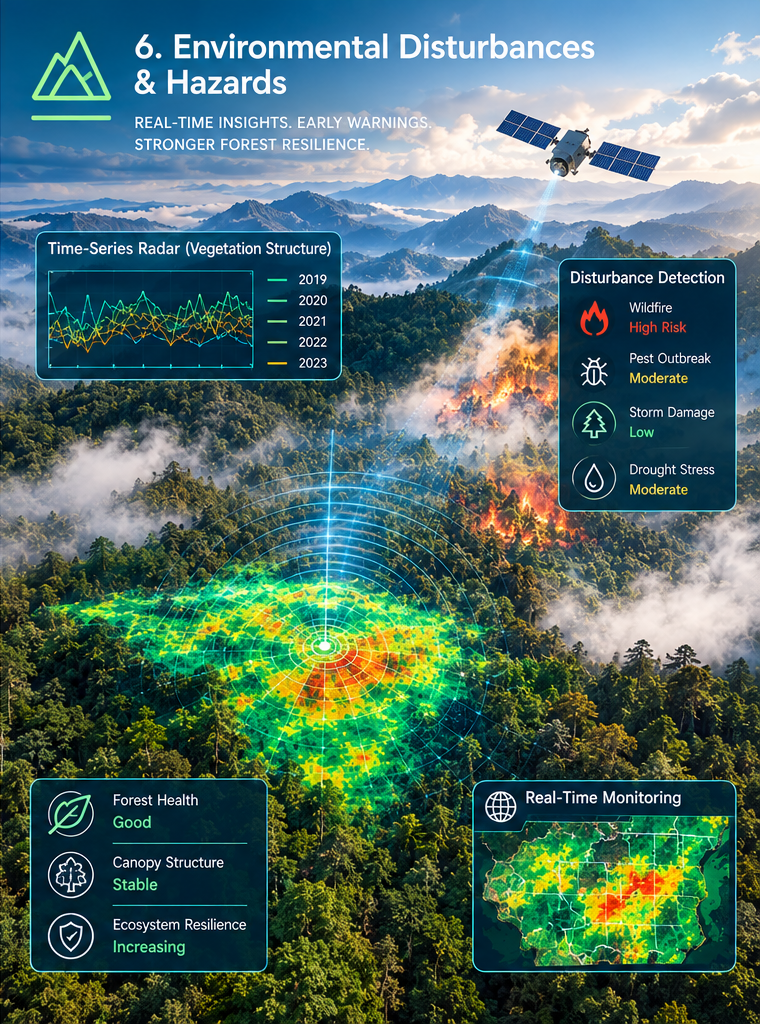
Land-Use Dynamics
Rapid environmental shifts demand immediate observational capabilities. We leverage high-revisit satellite constellations, Synthetic Aperture Radar (SAR), and time-series analysis to track near-real-time ecosystem disturbances—including wildfires, canopy mortality, drought stress, and illegal deforestation—providing early warnings and data for rapid-response conservation.
From planetary-scale science to place-based understanding

Wake Forest University Campus
Level II Arboretum

Experiential Learning
Campus as a Living Laboratory
Champion of Change
Winner
MEET US
Our Team
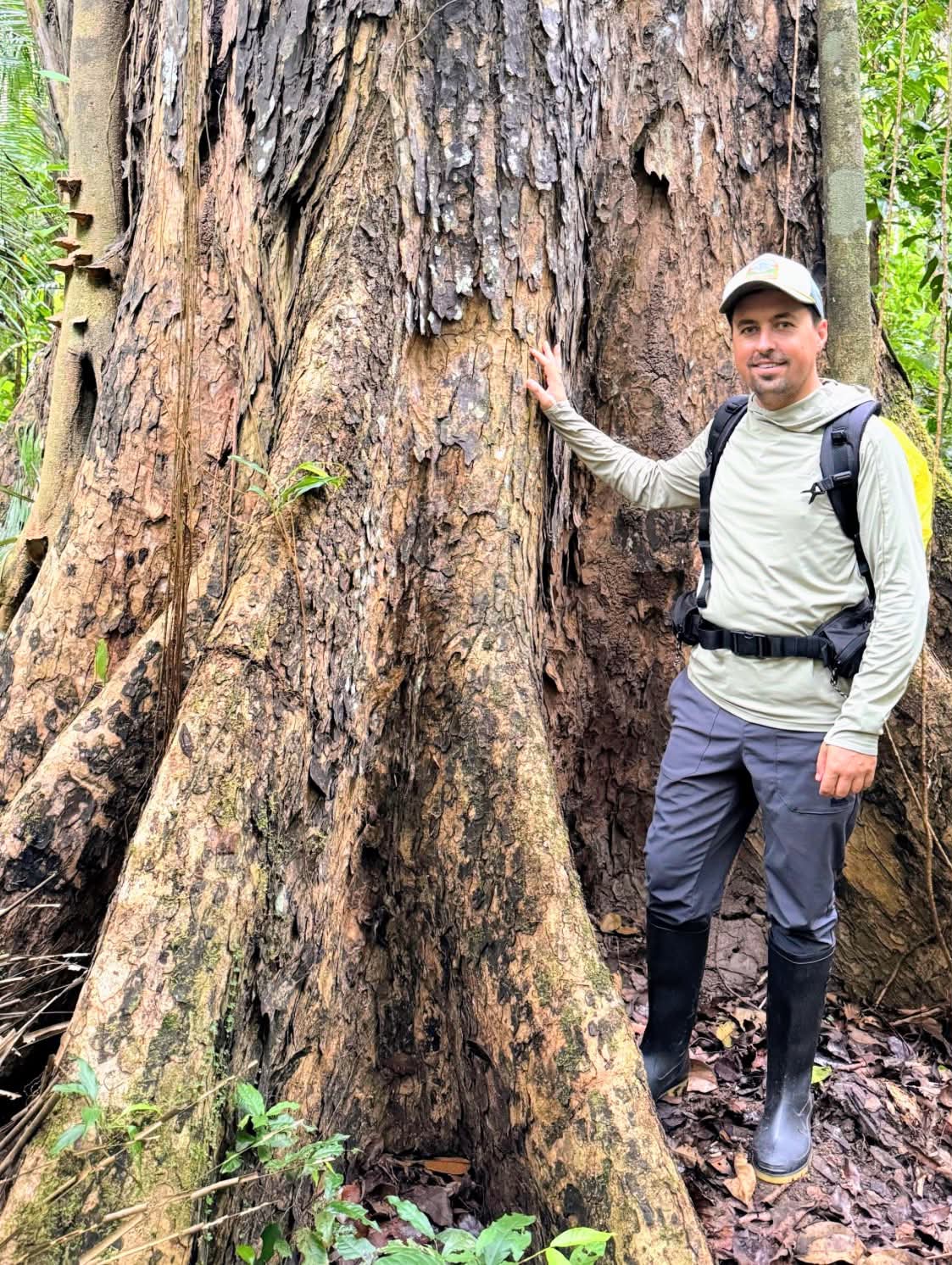
Ovidiu Csillik, Dr.
PI / ASSISTANT PROFESSOR
Dr. Ovidiu Csillik is an Assistant Professor and a former Researcher at NASA Jet Propulsion Laboratory (JPL) / Caltech. His work leverages advanced geospatial analytics, spatial data science, AI, and satellite technology to study how natural and managed ecosystems respond to environmental change.
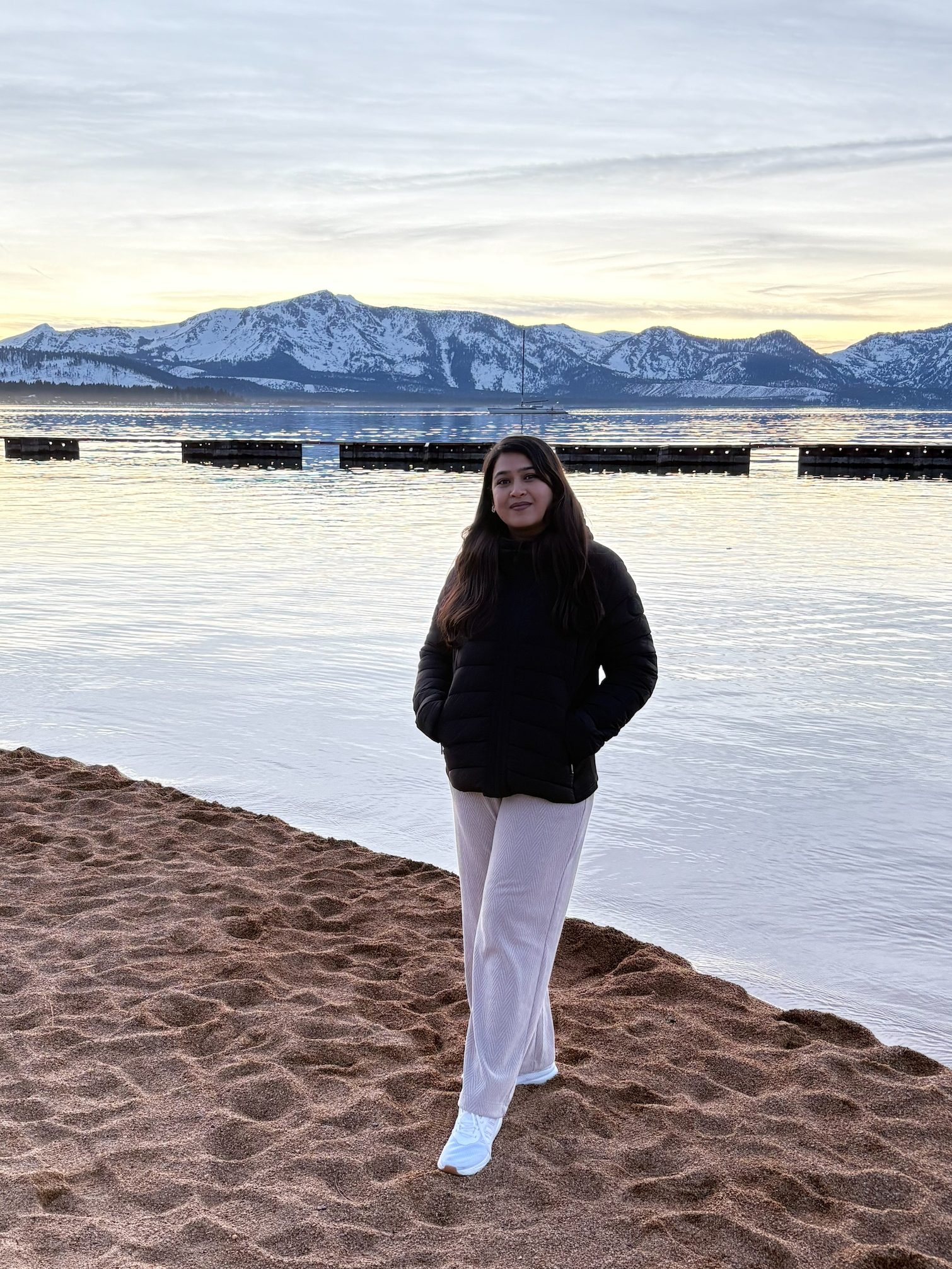
Nisham Thapa, Dr.
POSTDOCTORAL RESEARCHER
Dr. Nisham Thapa holds a PhD in Forestry with a specialization in geospatial data science from Auburn University, Alabama. Her work focuses on utilizing airborne lidar and high-resolution satellite imagery to estimate forest biomass, monitor disturbance, and map invasive species across disturbance-prone forests.

Rose Lu, Dr.
POSTDOCTORAL RESEARCHER
Dr. Rose Lu holds a PhD from Texas A&M University. Her work focuses on spaceborne LiDAR, biomass mapping, machine learning, cloud computing, and data fusion.
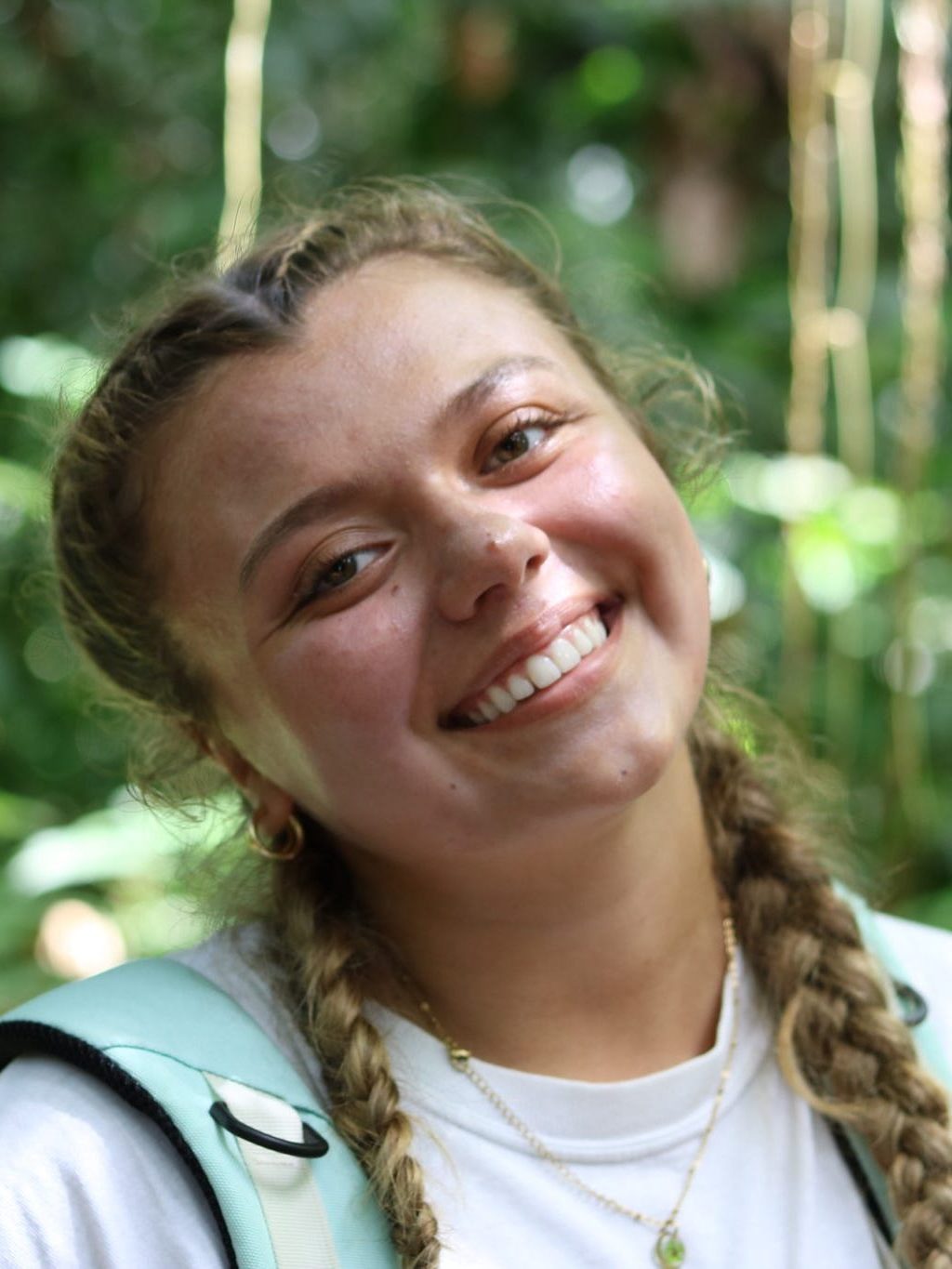
Julia Duzynski
UNDERGRADUATE RESEARCHER
GEDI, LiDAR, Forest Degradation, Amazon
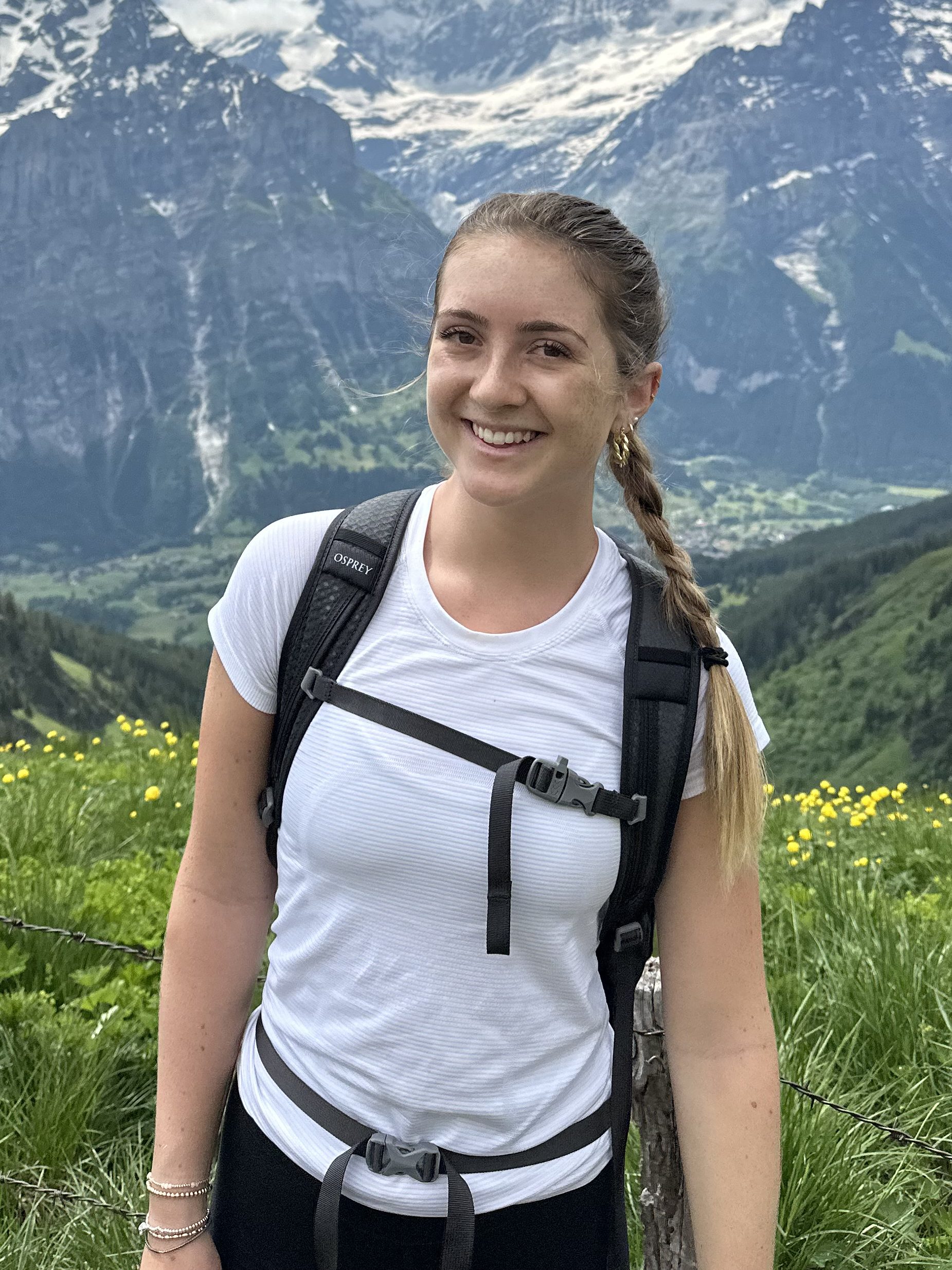
Mia Berens
UNDERGRADUATE RESEARCHER
Hyperspectral, Forest Degradation, Amazon

TBD
UNDERGRADUATE RESEARCHER
TBD
SPONSORS & COLLABORATORS
Our research is made possible through generous grant funding and interdisciplinary partnerships with leading scientific institutions.
Research Supported By

This material is based upon research supported by federal agencies and institutional grants. Any opinions, findings, or conclusions expressed on this website are those of the Csillik Lab and do not necessarily reflect the views of funding organizations.
Institutional Partners & Collaborators






INTERESTED IN EARTH OBSERVATION & DATA SCIENCE?
We are actively looking for motivated undergraduate researchers, graduate students, and postdocs passionate about remote sensing, python/coding, and forest ecology. If you want to build cutting-edge spatial models that address climate change, we want to hear from you.
FROM THE NEWS
Latest News
2026.11 – Nisham is joining the lab as Postdoctoral Researcher. Welcome Nisham!
2026.11 – Rose is joining the lab as Postdoctoral Researcher. Welcome Rose!
2026.10 – New US Department of Energy project funded!
2026.07 – Wake Forest University becomes a Level II Arboretum following our project.
2026.06 – Ovidiu attends NASA Biosphere meeting in College Park, MD.
2026.05 – Julia wins URECA Summer Scholarship at Wake Forest. Congratulations, Julia!
2026.05 – Ovidiu wins a Champion of Change award from Wake Forest Office of Sustainability.
2026.05 – Ovidiu attends ForestSAT 2026 conference.
2026.01 – New publication out in Tropical Ecology
2025.12 – Ovidiu attends AGU 2025 conference.
2025.12 – New publication out in Nature Communications Earth & Environment.
2025.09 – Undergraduates Mia Berens and Julia Duzynski join the lab. Welcome Mia! Welcome Julia!
2025.07 – New publication out in Environmental Research Letters.
2025.04 – Ovidiu attends GEDI Combined Science Team meeting in College Park, MD.
2025.04 – New publication out in Environmental Research Letters.
2025.02 – The PANGEA Scoping Study Final Report in out.
2025.01 – New publication out in PNAS.
2024.12 – Ovidiu attends AGU 2024 conference.
2024.09 – New NASA Carbon Monitoring System project funded!
2024.08 – New publication out in PNAS. Featured by Reuters, Nature, Mongabay.
2024.07 – New NASA GEDI Competed Science Team project funded!
2024.07 – Ovidiu joins Wake Forest as an Assistant Professor.